Dec-MARVEL: Decentralized Multi-Agent Exploration without Communication under Budget Constraints
Robot teams that coordinate on glimpses of one another rather than messages, while keeping enough travel budget to return to base.
I work at the intersection of embodied AI, reinforcement learning, and robotics. My research focuses on multi-task learning and world models for long-horizon robotic tasks, building agents that reason, adapt, and act reliably in complex environments.




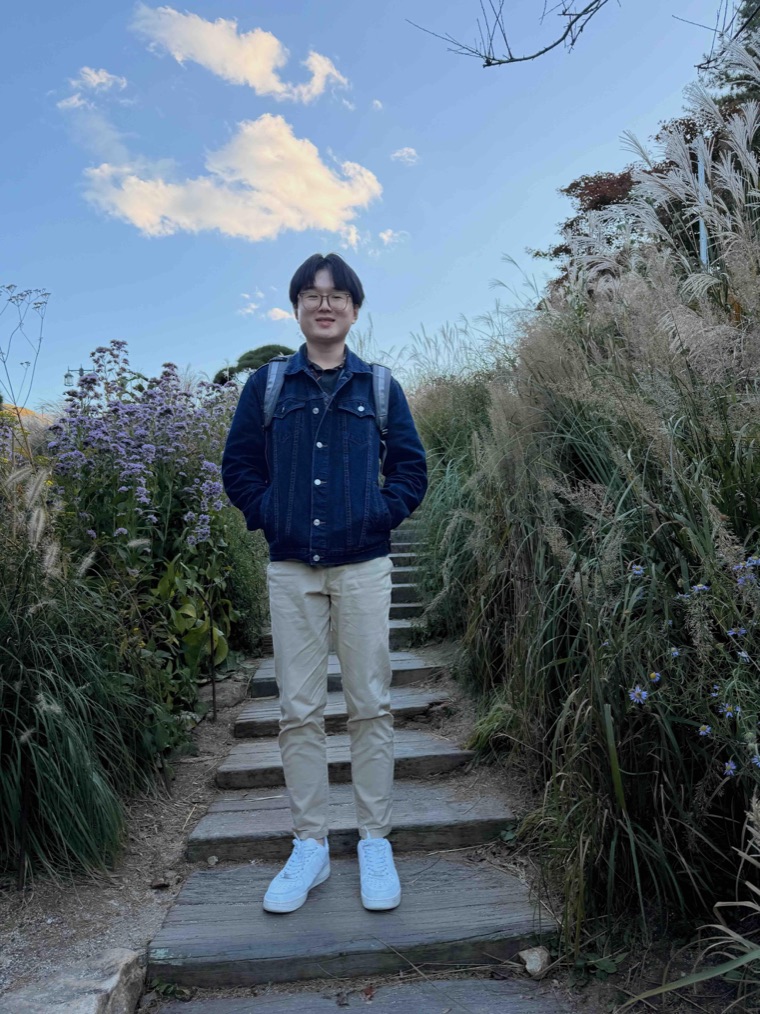
Senior Staff Engineer at Huawei Singapore Norbert Wiener Research Centre. Building learning systems for long-horizon robotic tasks, with a focus on multi-task learning, world models, and scalable embodied intelligence.
Advancing reasoning, generalization, and long-horizon control for embodied agents. I am interested in how learned world models and reusable skills can help robots plan, coordinate, and recover across diverse tasks.
My work asks how embodied agents can transfer skills, remember what matters, coordinate with other robots, and recover when long-horizon plans meet an uncertain world.
I connect world models, multi-task reinforcement learning, and robotic planning to build agents that improve across tasks instead of solving each problem from scratch.
Completed the New Employee Orientation programme at Huawei Malaysia in Kuala Lumpur.
"Dec-MARVEL: Decentralized Multi-Agent Exploration without Communication under Budget Constraints" is on arXiv — joint work with Janghyun Cho and Changjoo Nam (Sogang University).
Started as Senior Staff Engineer at Huawei Singapore Norbert Wiener Research Centre.
Built a vision-guided robotic system for fiber optic connector insertion, combining YOLO11n-pose, PnP pose estimation, multiview triangulation, and force-aware recovery.
"ORION: Option-Regularized Deep Reinforcement Learning for Cooperative Multi-Agent Online Navigation" has been accepted to IEEE Robotics and Automation Letters.
Collaborated with Yan Rui Tan on Sonic Intelligence, a real-time audio AI system for environmental awareness, contextual sound understanding, and multimodal agentic pipelines.
Joined a Singapore builder sprint on OpenAI's latest developer stack, exploring rapid AI prototyping with Codex, voice interaction demos, and startup-focused AI workflows.
Attended the Huawei PhD Career Day NUS session, reflecting on research careers, real-world impact, and the many paths available after the PhD.
Participated in the Google DeepMind x Cerebral Valley hackathon and built NaviSwarm, a Gemini-powered indoor wayfinding assistant with multi-agent spatial memory, voice interaction, and AR guidance.
Attending AAAI 2026; collaborating with Joonyeol Sim (UCI) on Multi-Agent Path Finding for expanding maps!
Engaged with leading scientists at the Amazon AI Research Night in Singapore.
Explored future tech horizons and networking at the Huawei Talent Night, Fullerton Bay Hotel.
Attended IEEE MRS 2025; collaborating with Cho Janghyun (Sogang University) on distributed multi-robot exploration.
"Search-TTA" framework for visual search accepted as a Spotlight paper. Seoul, Korea.
"Heterogeneous Multi-Robot Task Allocation" to be presented at IROS 2025 in Hangzhou, China.
Presenting "MARVEL" in Atlanta, USA. Session Room 312 on May 22.
Live demo of outdoor evasive search using multiple drones in an urban environment mockup.
"Heterogeneous Multi-Robot Task Allocation" accepted to IEEE RA-L.
Presented live demo of swarm robotics algorithms at the ICRA 2024 Expo in Yokohama, Japan.
Awarded Judge Commendation for Category E: Swarm at Singapore Autonomous Flower Model Comparison (SAFMC) 2023.
Recipient of the prestigious NUS-DSO Graduate Program scholarship for Ph.D. research.
Awarded the NUS Engineering Scholarship (E-Scholar) for undergraduate studies.
Robot teams that coordinate on glimpses of one another rather than messages, while keeping enough travel budget to return to base.
Introduces a decentralized MARL framework for scalable exploration for agents with constrained field-of-view.
A comprehensive stack that simplifies the development and deployment of swarm algorithms on real hardware.
A framework that aligns remote sensing imagery with ground-level visual priors to improve robotic search efficiency using test-time adaptation.
A hierarchical RL approach that jointly optimizes task scheduling and allocation for heterogeneous robot teams.
Presents a learning-based solution for the visibility-based pursuit-evasion game. Unlike classical methods, ViPER utilizes a GNN-based policy.
A DRL approach for autonomous navigation that leverages context to improve performance in unknown environments.
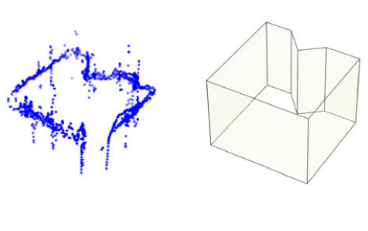
Research on generating 3D maps for complex indoor environments that do not follow the Manhattan world assumption and using a sparse LiDAR sensor.
This project develops a high-fidelity framework for embodied object navigation by leveraging incremental 3D Scene Graphs and foundational Vision-Language Models (VLMs). By moving beyond flat occupancy maps, the system builds a hierarchical semantic representation of the world that captures objects, rooms, and their relationships. The system utilizes Knowledge-Augmented Generation (KAG) to predict structural and semantic properties of unobserved regions, enabling robots to perform complex, cross-modal search missions based on categories, natural language descriptions, or visual exemplars in completely unknown topographies.
This project explores the integration of foundational Vision-Language Models (VLMs) and Large Language Models (LLMs) to redefine the cognitive architecture of intelligent navigation. We investigated a framework that leverages the zero-shot reasoning capabilities of internet-scale foundational models alongside a structured spatial-semantic memory. This enables embodied agents to perform complex, language-driven semantic search tasks—such as finding specific objects described in everyday natural language—by reasoning over environmental uncertainty and past observations in completely novel environments.
This project introduces MARVEL (Multi-Agent Reinforcement Learning for Constrained Field-of-View Multi-Robot Exploration), a framework for high-performance, decentralized coordination in large-scale environments. By leveraging Graph Attention mechanisms, MARVEL enables robot teams to reason about teammate intent and spatial dependencies under restricted sensing constraints. Our approach focuses on information-theoretic action pruning to optimize coverage and mission efficiency, facilitating complex collaborative maneuvers in completely unknown topographies without a central controller. Its follow-up, Dec-MARVEL, drops inter-robot communication altogether, coordinating on opportunistically observed teammate trajectories while holding every robot to a travel budget that guarantees a return to base.
This project develops a decentralized, learning-based framework for visibility-based pursuit-evasion in challenging outdoor environments. We focus on enabling teams of mobile agents to systematically clear contaminated spaces and capture adversarial evaders within high-density urban terrains. By integrating multi-agent reinforcement learning with advanced spatial reasoning, the system addresses the critical challenges of building-induced occlusions and limited sensor ranges, allowing for real-time coordinated maneuvers without the need for a central controller.
This project introduces STAR (Swarm Technology for Aerial Robotics), a modular, open-source infrastructure designed to bridge the gap between simulation and high-fidelity physical deployments. STAR integrates decentralized task allocation with robust vision-based landmark localization to manage fleets of nano-quadrotors (e.g., Crazyflies) in cluttered environments. The framework provides a high-throughput ROS 2-based communication layer and a hardware-in-the-loop (HIL) sim-to-real pipeline, enabling researchers to validate complex multi-agent algorithms, reactive obstacle avoidance, and swarm behaviors on physical robotic collectives.
This project develops a decentralized framework for context-aware navigation, enabling embodied agents to perform complex path-finding and search tasks in unknown environments without prior maps. By leveraging Graph Attention Networks to encode environmental context, the framework allows robots to reason about the global structure of a space from local observations. This enables a suite of navigation capabilities—from zero-shot exploration to adaptive prior-based path-finding—that outperform traditional geometric planners in both computational efficiency and success rate.
Contributing to the research community as a reviewer across robotics, AI, and automation venues.
Don't have time to read a 20-page paper right now? Upload any research PDF to instantly generate a beautifully structured, comprehensive summary powered by Google Gemini.
Try the Tool