Building Intelligent
Embodied AI Systems

Ph.D. Candidate in Robotics @ NUS

I research Embodied AI and Cognitive Robotics, building AI systems that connect perception, language, and decision-making in real-world agents. My research develops robust, scalable approaches for intelligent scene understanding with vision-language models (VLMs) and decentralized, multi-agent learning and control to enable reliable action in complex environments.

Embodied AI Cognitive AI Foundation Models Vision-Language Navigation 3D Semantic Scene Graphs Multi-Agent Coordination & RL Robotics
Python Python PyTorch PyTorch Stack LLM & VLM Habitat Habitat-Sim Nav Mapping & Nav ROS ROS2

What's New

Latest Updates

Aug 2025
"Search-TTA: A Multimodal Test-Time Adaptation Framework for Visual Search in the Wild" accepted to CoRL 2025 (Seoul, Korea) as a Spotlight paper!
June 2025
IEEE RA-L paper "Heterogeneous Multi-Robot Task Allocation and Scheduling via Reinforcement Learning" to be presented at IROS 2025 (Hangzhou, China).
May 2025
Presenting "MARVEL: Multi-Agent Reinforcement Learning for Constrained Field-of-View Multi-Robot Exploration" at ICRA 2025 (Atlanta, USA). Drop by Room 312 on 22 May 2025!
April 2025
Invited Showcase at SAFMC 2025 (SUTD)! Live demo of outdoor evasive search using multiple drones in an urban environment mockup.
March 2025
Work on "Heterogeneous Multi-Robot Task Allocation and Scheduling via Reinforcement Learning" accepted to IEEE RA-L.
Jan 2025
"MARVEL" accepted to ICRA 2025 for oral presentation. Proposing a robust collaborative exploration framework for FoV-constrained robots.
Oct 2024
Successfully presented "STAR: Swarm Technology for Aerial Robotics Research" at ICCAS 2024 (Jeju, Korea).
Aug 2024
"STAR" accepted for poster presentation at ICCAS 2024 (Jeju, Korea)!
July 2024
Passed the Oral Qualifying Examination (OQE) and officially confirmed as a Ph.D. Candidate!
May 2024
Live demo of swarm robotics with deep reinforcement learning capabilities at ICRA 2024 Expo (Yokohama).
Aug 2023
"Context-Aware Deep Reinforcement Learning for Autonomous Robotic Navigation in Unknown Area" accepted to CoRL 2023 (Atlanta, USA)!
July 2023
Successfully passed the Ph.D. Comprehensive Qualifying Examination (CQE), marking a key milestone in my doctoral journey.
April 2023
Clinched the Judge Commendation at SAFMC 2023 for our novel DRL-based approach for indoor drone search.
March 2023
Selected for Static Display at SAFMC 2023 (SUTD) for our multi-drone indoor exploration algorithm.

Selected Research

ICRA 2025 • Atlanta, USA 🇺🇸

MARVEL: Multi-Agent Reinforcement Learning for Constrained Field-of-View Multi-Robot Exploration in Large-Scale Environments

Jimmy Chiun, Shizhe Zhang, Yizhuo Wang, Yuhong Cao, Guillaume Sartoretti

Introduces a decentralized MARL framework for scalable exploration for agents with constrained field-of-view.

ICCAS 2024 • Jeju, South Korea 🇰🇷

STAR: Swarm Technology for Aerial Robotics Research

Jimmy Chiun, Yan Rui Tan, Yuhong Cao, John Tan, Guillaume Sartoretti

A comprehensive stack that simplifies the development and deployment of swarm algorithms on real hardware.

CoRL 2025 • Seoul, South Korea 🇰🇷 (Spotlight)

Search-TTA: A Multimodal Test-Time Adaptation Framework for Visual Search in the Wild

Derek Ming Siang Tan, Shailesh, Boyang Liu, Alok Raj, Qi Xuan Ang, Weiheng Dai, Tanishq Duhan, Jimmy Chiun, Yuhong Cao, Florian Shkurti, Guillaume Sartoretti

A framework that aligns remote sensing imagery with ground-level visual priors to improve robotic search efficiency using test-time adaptation.

IEEE RA-L 2025 (IROS 2025 • Hangzhou, China 🇨🇳)

Heterogeneous Multi-Robot Task Allocation and Scheduling via Reinforcement Learning

Weiheng Dai, Utkarsh Rai, Jimmy Chiun, Yuhong Cao, Guillaume Sartoretti

A hierarchical RL approach that jointly optimizes task scheduling and allocation for heterogeneous robot teams.

CoRL 2024 • Munich, Germany 🇩🇪

ViPER: Visibility-Based Pursuit-Evasion via Reinforcement Learning

Yizhuo Wang, Yuhong Cao, Jimmy Chiun, Sourav Koley, Minh Pham, Guillaume Sartoretti

Presents a learning-based solution for the visibility-based pursuit-evasion game. Unlike classical methods, ViPER utilizes a GNN-based policy.

CoRL 2023 • Atlanta, USA 🇺🇸

Context-Aware Deep Reinforcement Learning for Autonomous Robotic Navigation in Unknown Area

Jingsong Liang, Zhichen Wang, Yuhong Cao, Jimmy Chiun, Mengqi Zhang, Guillaume Adrien Sartoretti

A DRL approach for autonomous navigation that leverages context to improve performance in unknown environments.

3D Map Generation
2024 CIS-RAM • Hangzhou, China 🇨🇳

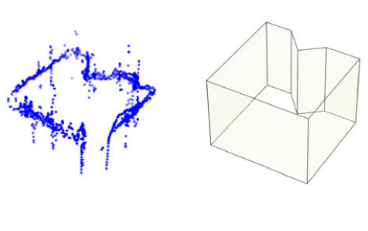
3D Map Generation for Indoor Non-Manhattan World Environments

Timothy Bonner, Bryan Wei Xian Lee, Sutthiphong Srigrarom, Wai Lun Leong, Jimmy Chiun

Research on generating 3D maps for complex indoor environments that do not follow the Manhattan world assumption and using a sparse LiDAR sensor.

Projects

SCENE REASONING

3D Scene Intelligence for Cross-Modal Foundational Search

This project develops a high-fidelity framework for embodied object navigation by leveraging incremental 3D Scene Graphs and foundational Vision-Language Models (VLMs). By moving beyond flat occupancy maps, the system builds a hierarchical semantic representation of the world that captures objects, rooms, and their relationships. The system utilizes Knowledge-Augmented Generation (KAG) to predict structural and semantic properties of unobserved regions, enabling robots to perform complex, cross-modal search missions based on categories, natural language descriptions, or visual exemplars in completely unknown topographies.

3D Scene Graphs Vision-Language Models Knowledge-Augmented Generation Cross-Modal Search Foundation Models
EMBODIED NAVIGATION

Cognitive Architectures for Long-Horizon Semantic Navigation with Visual-Language Priors

This project explores the integration of foundational Vision-Language Models (VLMs) and Large Language Models (LLMs) to redefine the cognitive architecture of intelligent navigation. We investigated a framework that leverages the zero-shot reasoning capabilities of internet-scale foundational models alongside a structured spatial-semantic memory. This enables embodied agents to perform complex, language-driven semantic search tasks—such as finding specific objects described in everyday natural language—by reasoning over environmental uncertainty and past observations in completely novel environments.

Embodied AI Long-Horizon Reasoning Visual-Language Priors Zero-Shot Navigation Semantic Search
SEARCH & PURSUIT

Adversarial Multi-Agent Pursuit-Evasion in Complex Stochastic Environments

This project develops a decentralized, learning-based framework for visibility-based pursuit-evasion in challenging outdoor environments. We focus on enabling teams of mobile agents to systematically clear contaminated spaces and capture adversarial evaders within high-density urban terrains. By integrating multi-agent reinforcement learning with advanced spatial reasoning, the system addresses the critical challenges of building-induced occlusions and limited sensor ranges, allowing for real-time coordinated maneuvers without the need for a central controller.

Multi-Agent RL (MARL) Multi-Agent Coordination Graph Attention Networks Decentralized Control
MULTI-AGENT COORDINATION

Scalable Decentralized Coordination for Complex Multi-Robot Systems

This project introduces MARVEL (Multi-Agent Reinforcement Learning for Constrained Field-of-View Multi-Robot Exploration), a framework for high-performance, decentralized coordination in large-scale environments. By leveraging Graph Attention mechanisms, MARVEL enables robot teams to reason about teammate intent and spatial dependencies under restricted sensing constraints. Our approach focuses on information-theoretic action pruning to optimize coverage and mission efficiency, facilitating complex collaborative maneuvers in completely unknown topographies without a central controller.

MARL Graph Neural Networks Information-Theoretic Planning Multi-Robot Coordination
SWARM ROBOTICS

A Modular Infrastructure for Agile Nano-Quadcopter Swarm Autonomy

This project introduces STAR (Swarm Technology for Aerial Robotics), a modular, open-source infrastructure designed to bridge the gap between simulation and high-fidelity physical deployments. STAR integrates decentralized task allocation with robust vision-based landmark localization to manage fleets of nano-quadrotors (e.g., Crazyflies) in cluttered environments. The framework provides a high-throughput ROS 2-based communication layer and a hardware-in-the-loop (HIL) sim-to-real pipeline, enabling researchers to validate complex multi-agent algorithms, reactive obstacle avoidance, and swarm behaviors on physical robotic collectives.

Swarm Robotics Sim-to-Real Deployment Agile Autonomy ROS 2 Architecture
CONTEXT-AWARE NAVIGATION

Leveraging context for robotic navigation in unknown environments

This project develops a decentralized framework for context-aware navigation, enabling embodied agents to perform complex path-finding and search tasks in unknown environments without prior maps. By leveraging Graph Attention Networks to encode environmental context, the framework allows robots to reason about the global structure of a space from local observations. This enables a suite of navigation capabilities—from zero-shot exploration to adaptive prior-based path-finding—that outperform traditional geometric planners in both computational efficiency and success rate.

Context Learning Test-Time Adaptation Multimodal Fusion Path-Finding Priors

Work Experience

2022-Present
Associate Scientist
Temasek Laboratories @ NUS (Swarm Autonomy Lab)
Apr 2024-Jul 2024
Robotics Autonomy Intern
DSO National Laboratories (Robotics Division)

Academic Journey

2022-Present
Ph.D. Candidate, Robotics
National University of Singapore
2022
Bachelor of Engineering (Highest Distinction)
National University of Singapore

Honors & Awards

April 2025
Invited Showcase (Outdoor Evasive Search) @ SAFMC 2025
May 2024
Presented Live Demo (Swarm Robotics) @ ICRA 2024 Expo
April 2023
Awarded Judge Commendation @ SAFMC 2023 CAT E: Swarm
March 2023
Selected for Static Display @ SAFMC 2023
July 2022
Awarded NUS-DSO Scholarship under the NUS-DSO Graduate Program
July 2022
Attained Highest Distinction, Bachelor of Engineering, NUS
August 2019
Awarded the prestigous NUS E-Scholar Scholarship

Curriculum Vitae